Anne Beaulieu
Research and Publications
Two positions at Campus Fryslân
Apply to become my new colleagues !
!
Two positions (assistant professor) are currently open at the University of Groningen. A background in STS is relevant for both positions, and both are located in the new faculty Campus Fryslan, an interdisciplinary and innovative setting.
Assistant Professor Data Science (0.8 fte)
Assistant Professor Earth & Energy (0.8 – 1.0 FTE)
Please note that the deadline for applications is 23 February 2020.
PhD opportunity: Knowledge Infrastructures for Climate Adaptation
We have a PhD position on the topic of Knowledge Infrastructures for Climate Adaptation. In the framework of unprecedented global environmental change, it is crucial to map and increase environmental resilience. In this project, we aim to acquire insights into ongoing environmental changes in delta areas and build sustainable knowledge infrastructures that can elucidate ongoing changes.
The candidate will be supervised by Tessa van der Voort and myself. More details on the project and how to apply on the jobs website of the University of Groningen.
Launching of WTMC series
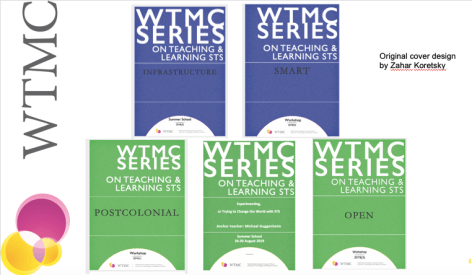 Looking back on 2019, I’m especially proud of having led the launch of the WTMC series on teaching and learning STS. This series is based on the collective wisdom of the WTMC network that gets channelled into training events for PhDs. Each issue of the series is based on a workshop or summer school organised by WTMC. Bernike Pasveer and I, as coordinators, shape the events– drawing on STS experts and organising interaction with participants.
Now, thanks to the series and its many contributors, the insights on important STS topics and approaches can be share much more widely. At the WTMC annual meeting on 13 December 2019, the first 5 issues of the WTMC Series on Teaching and Learning STS were launched. They are available on the WTMC website (https://www.wtmc.eu/wtmc-series/)
New issues will appear regularly, following the workshops and summer schools. Your comments and feedback on this new initiative are very welcome!
.
Why are there different forms of digital identity?
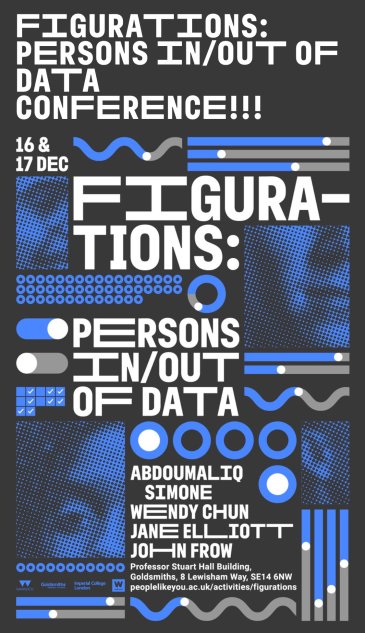
The conference Figurations (part of the wonderful People like You project) was the opportunity to start a writing project with Oskar Gstrein, a colleague at Campus Fryslan and member of the Data Research Centre, where digital identity is one of our main themes. Oskar presented our paper this week at Goldsmith, London.
In this project, we take a look at several existing concepts that address the division of private and public space, and discuss how these definitions affect the figuration of person(s) in and out of data.[1] We contrast the concept of data subject whose data is being “protected” (the basis of the GDPR) with other approaches, including the German concept of informational self-determination, or the South American “habeas data” doctrine. We explore the tensions between considering the different societal and cultural traditions from which these concepts arise, the conceptualization of privacy as a universal right, the (seemingly?) global nature of digital platforms,[2] and the perennial vision of the digital as a universal space of data.
These considerations lead us to reflect on the mutual adjustments that are ongoing: as we move in/out of data and as the digital becomes an inherent part of our identity, we both change our understanding of person to be able to effectively address privacy, and adjust our concept of privacy to address the concept of personhood.
To begin to map out these relations, we connect our analysis of forms of privacy to specific instances of datafication, so that particular instances ‘stand in’ as exemplars of different approaches and of how legal frameworks and personhood intersect.
[1] Hildebrandt, Privacy as Protection of the Incomputable Self: From Agnostic to Agonistic Machine Learning, Theoretical Inquiries in Law, Volume 20, Issue 1, Pages 83–121, doi: 10.1515/til-2019-0004.
[2] Martel, Smart – Enquête sur les Internets, Stock 2014.
PhD position Knowledge Infrastructures for Climate Adaptation
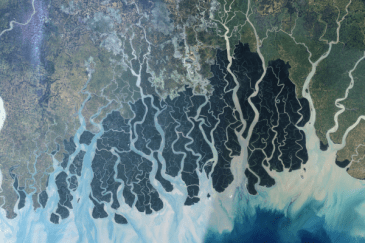
In the framework of unprecedented global environmental change, it is key to map and increase environmental resilience. In this project, we aim to acquire insights into ongoing environmental changes in delta areas and build sustainable knowledge infrastructures that can elucidate ongoing changes.
Campus Fryslân offers a four-year PhD position to complete a PhD in Knowledge Infrastructures for Climate Adaptation aimed at Climate Resilience in Delta Areas Supported by Responsible Data Infrastructures. The PhD candidate will be connected to the Data Research Centre of Campus Fryslân and supervised by Dr Tessa van der Voort and Dr Anne Beaulieu. The PhD candidate will be enrolled in the Graduate School of Campus Fryslân (GSCF) and depending on profile, in the graduate school WTMC. PhD candidates can benefit from affiliations at research institutes of the University of Groningen, such as the Bernoulli Institute for Mathematics, Computer Science and Artificial Intelligence or ESRIG – Energy and Sustainability Research Institute Groningen, among others, as appropriate to the PhD Project.
Please see the website of the University of Groningen for more details and for information on how to apply.
New forms of recognition and reward
Today marks the first day of the WTMC workshop Open. It follows on the heels of one of the biggest academic policy announcement of the last decade. The VSNU, NFU, KNAW, NWO and ZonMW jointly published a statement on recognition and rewards. It is a call to move away from indicator-based, quantiative focus on research performance, to create new career paths, and to find a balanced way to recognize and rewards academics across
- Education
- Research
- Impact
- Leadership
- Patient care (for university medical centres).
This means that aspects of academic work such as team work, leadership, and open science must also be reflected in evaluations. The vision of open science contained in this report will surely be the focus of very interesting discussions in the coming days, beginning with the opening lecture this morning by Frank Miedema, one of the leaders of the Science in Transition movement.
In addition, one of the concrete recommendations of this report addresses the need to redesign career paths, including the requirements for PhDs:
Universities and university medical centres will ensure that the criteria that (within disciplines or universities) apply to doctoral programmes fit the assessment of research quality, thus meeting the DORA principles. Conditions for being allowed to defend one’s thesis must not just consist of purely quantitative indicators, such as number of publications or the journal impact factor of the journal in which one has published (RFET, p.6)
Given that the workshop is attended by PhDs, it will be very interesting to hear what changes they expect on the ground.
Furthermore, the Graduate School at Campus Fryslan has been considering how to reformulate exactly the part of its “Training and Supervision Plan” that describes the desired output for PhDs. And happy to say that at all levels of recognition and reward, Campus Fryslan has been moving in the direction of this report, and working on a ‘mission-based’ evaluation scheme to be elaborated by each academic, in consultation with a peer-review group. Exciting times in academia!
Seeking new colleague!
Employment Opportunity: Assistant Professor Sustainability & Environmental Sciences (0.8 FTE)
University Campus Fryslan (UCF) invites applications for a motivated colleague at the level of Assistant Professor Sustainability & Environmental Sciences. You are expected to contribute to the development of the educational and research domain of earth system sciences, environmental studies and science and technology studies, specifically with regard to interdisciplinary research integrating methods of the natural and social sciences to assess the connections between the global environment and human activities. Furthermore, you will teach and develop courses in the major Responsible Planet within the BSc Global Responsibility & Leadership. You will have the unique opportunity to combine education with research and shape the emerging research programme. Finally, we are highly committed to building a diverse and dynamic academic community in Leeuwarden, and we expect a similar commitment from all our academic staff.
Qualifications
We are looking for an enthusiastic colleague with demonstrated research and teaching potential and a strong research background, with proven affinity for interdisciplinary approaches. Research expertise that involves data, modelling or digital infrastructures is especially suited to the working environment, facilities and research lines of Campus Fryslan.
The ideal candidate has a PhD in Earth Sciences, Environmental Studies, Sustainability Studies, Science and Technology Studies or a comparable domain.
Further information
See the full call for applicants on the website of the University of Groningen
https://www.rug.nl/about-us/work-with-us/job-opportunities/overview?details=00347-02S0006O1P&cat=wp
The why of interdisciplinarity
In the academic year 2017-18, I had the pleasure of being visiting fellow at the Pufendorf Institute at the University of Lund, in the DATA theme. Interdisciplinarity was a recurring topic in the exchanges with members of the theme group and the other visiting scholars. In particular, I had the opportunity of speaking on this topic at the closing workshop of the theme group, when I reflected on the intersection of interdisciplinarity with Big Data (or as I prefer to formulate it, as a practice and not as a object/thing, the intensification of data in knowledge production).
Interdisciplinarity, as a ‘framing issue’ and in relation to digital data, is coming up again in a budding collaboration. This gave rise to a very nice first brainstorm with Noortje Marres and Sybille Lammes in the cracks of the conference Science and Technology Indicators 2018 in Leiden.
Two related questions that I had started addressing last year resurfaced for me in that stimulating conversation: Why would we want to shape/nurture/defend/score with interdisciplinary practices in the first place? And in particular, how do we entwine interdisciplinarity and different types of data-intensive practices?
I hope to think with this emerging group further about this, and am consolidating some of my answers-in-the-making here:
Interdisciplinary knowledge in a data-intensive context is better knowledge.
Better how?
Better if it has hooks and it has blushes; if it is multiple and accountable.
Hooks
Think hooks, like on a well functioning piece of velcro… knowledge that has been produced in contact, intera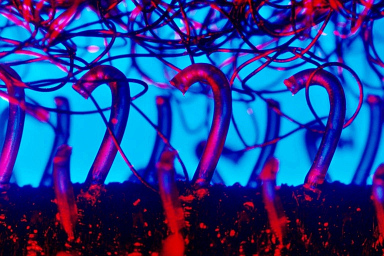 ction or exchange with other disciplines or other practices is knowledge that is not hermetic, that has hooks that can allow it to connect to other surfaces. It is knowledge that can stick, it is knowledge that can bind.
Interdisciplinary interaction creates these hooks through friction –roughening up the surface through contact. And these interactions clarify what is needed for the hooks and eyes to meet.
Blushes
Like any of us in a self-conscious moment, knowledge that has been produced in an interdisciplinary context is knowledge that knows how to blush, that is visibly, outwardly modest. It knows its limitations, it’s aware of its assumptions, it’s sensitive to boundaries.
Multiple yet accountable
This third aspect is the one where I see specific features of knowledge most clearly being shaped by the intersection of data intensification and interdisciplinarity. Processes of data intensification involve increased formalisation. Across projects (at the Virtual Knowledge Studio and later in Energysense) I experienced again and again how formalisation and infrastructural work that are part of data intensification are crucial ways of becoming aware of assumptions, limitations and opportunities. Building digital resources together involves intense interaction about the epistemic practices of research. And these yield important experiences and insights, especially resonant when they are formed in the course of providing each other with accounts–in the sense of stories, not in the sense of communication of financial information about economic entities.
What might that look like, really concretely? Once you’ve had to explain your work to someone from another discipline or to the data scientists or designers in the team, and when you’ve repeatedly experienced how a question about how to formalize a type of data or result leads to a question about methods, then to concepts, and traditions in the field and then back to data collection, once you’ve really explained these connected practices forwards and backwards so that the others get it, once you’ve really explored what formalisation can and cannot do and felt through playing around with the prototype how infrastructuring changes you research practices… you’ll find it hard to think about your data and disciplinary baggage as something self-evident and transparent and to separate it from these accounts.
Perhaps I am getting quite normative in middle-age. In any case, I’m curious and excited to see how these questions and answers will develop in the course of further collaboration with colleagues at CWTS, Leiden University and at the Center for Interdisciplinary Methodologies at the University of Warwick.
Les competitions de l’ été 2018
A wonderful way to enjoy the places I go… with warmest thanks to the hosting clubs for their hospitality.
SwimIn Leiden


And a Swim Run with the Ottawa Triathlon Club and my little brother (first row, left, showing off his brand new garmin).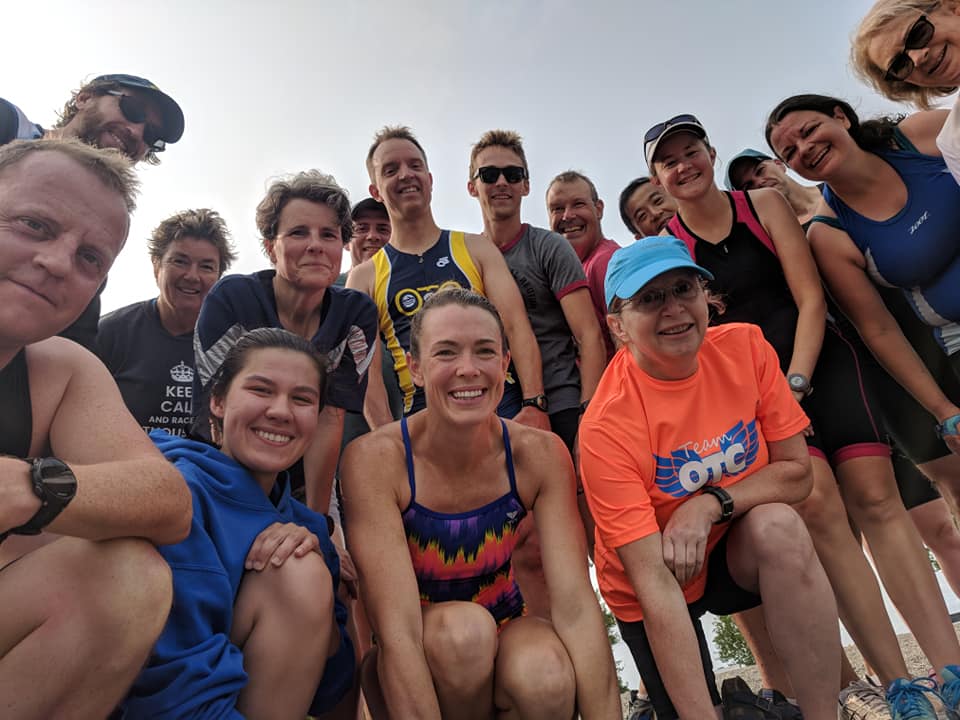
First Tri!
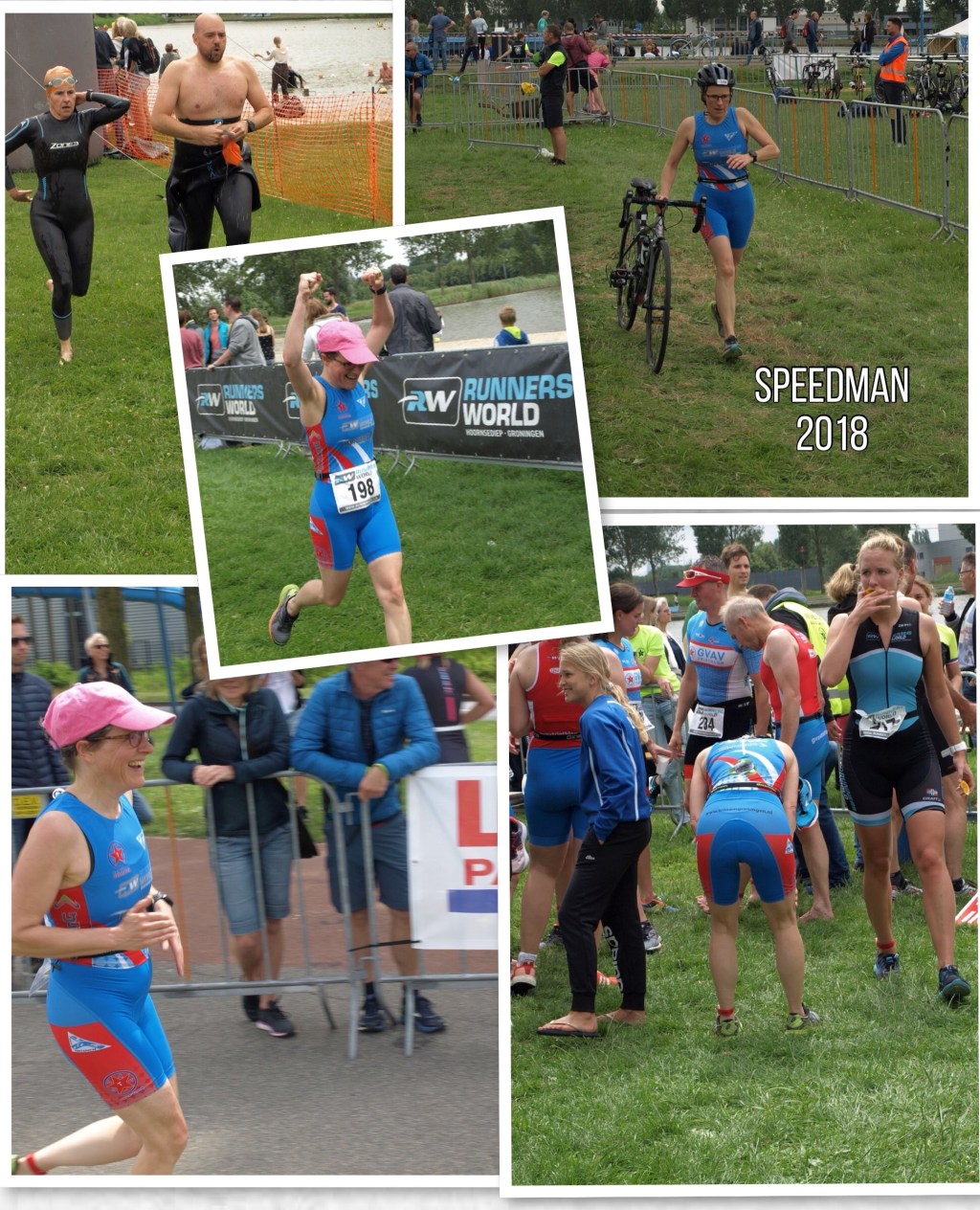
Sunday 17 June was the big day: the Speedman Triathlon. It was hugely fun is the best way to summarise the event. With a time of 1 hour 30 minutes and 40 seconds, I was quite pleased. As expected the swim was quite fast; I surprised myself by finishing the cycling (22km) 6 minutes faster than I expected and the run went pretty much according to plan.
The main goal was to repeat my ‘fearless’ approach, as practiced in the Zwemloop in April, and I was very happy with how that worked out. Cycling probably went faster (in spite of fairly strong breeze) through the competitor effect: I usually ride alone, and seeing people ahead was a very motivating factor. And my family was a big support: Maarten was there throughout, shouted at me at every possible occasion that I was going very fast (at least, that’s what I think he was saying), and took the pictures below. Felix also generously worked as a volunteer, getting up at 6 am to help set out the barriers along the course.
The run up
In the ten days running up to the competition, I had the usual challenges of feeling restless (less training=more time to think!) and feeling the ghosts of injuries past. Luckily I had been forewarned that these are typical tapering symptoms, and that helped take things with a grain of salt. Note to self: plan a movie or other activity the night before. It was a very LONG evening.
XXL
An interesting challenge in setting up my transition area: the bike racks were so big that I could not rack my bike normally: if I did, the entire bike was hanging off the ground, and because of the wind, it swayed back and forth. It didn’t seem like a good idea to leave it like that (can you get disqualified for something like that?) and I figured an alternative ‘parking’ modus. So no, it wasn’t a newbie thing, it was a size thing.
The event itself
Having arrived quite early, I had lots of time to go through my ‘routine’ and check out the course and get set up. Also chatted up a couple of competitors, which helped make the time go by until the start. The swim was great: I took up a spot right at the front, in the second row (fearless!) and had the feeling I hardly had to do anything, was just going with the flow. I did slow down a bit at one point, as I felt I was getting a bit too much out of breath, but that was the only time in the whole competition that I held back (’cause, you know, fearless). I came out of the water and was 30th or so. The transition went by in a flash and I didn’t forget anything. Cycling was a lot of fun, partly because having to adapt to the wind in this course with quite a few turns and bends kept me busy. And I had Bla bla bla in my head to keep me going.
Before I knew it, my watch was telling me I had cycled 18 km! Off the bike and unto the 8-shaped race course for two loops. And no jelly legs!?!! Perhaps because of the long transition jog. Whatever the reason, I didn’t mind skipping that. My legs felt like they were on automatic pilot and I found myself staring at 5.02 and 5.05 paces, which helped to ignore the stitches I had (both sides) and which thankfully went away after about 20 minutes. On the way up the HILL, the pace slowed to 7.00 but I’ll be prepared for that next time. The final 700 meters were hard and I really had to push myself to keep it going and enjoy a strong finish.
Afterwards
A bit of chit chat to co-competitors and volunteers from my club, savouring some coloured water that tasted like the finest champagne, and meeting up with Maarten. He drove back home while I slowly gathered myself together. I was funny to realize that I had worked out the entire day up to that moment–and had to work hard to turn my brain back on and think about what I was meant to be doing. Managed to cycle home. Showered and glowed and met up with good friends to raise a glass–and that was really the perfect end to this day!
Recovery
Later in the week, after a little swim of 10 minutes on Monday and a recovery run on Thursday, I was feeling functional again. The soreness was not so surprising, but the overall tiredness (also mental) I felt until Wednesday morning was. Something to keep in mind next time–plan a half day off!
So, that was that, back to training
But, surprise, it wasn’t all done and dusted! On Friday afternoon, I received an email from the NTB (Dutch Triathlon Association), inviting me to join the Dutch Age-Group Team for the European Championship. Eh? What?! My first reaction was to check whether the mail was indeed intended for me. It seems it was. Who would have thought? I mean, I know triathlon is not a very big sport and that women my age are busy doing other (useful) stuff, but qualifying for such an event certainly put my efforts in a different light. Because it falls mid-August when we’re in Canada, I won’t be going to Glasgow. But it sure is nice to be asked!
Embrace the suck…and the success
‘Embrace the suck’ is one of those triathlon mantras that is as ugly as it is useful. But triathlon is also teaching me about artifice, about the games I play with myself and about what matters and about what works. So, after a day of disclaimers, which I will spare you here, I am embracing the success! First of all, this invitation impressed my teenage son–and how often does that happen these days. Second, thinking about what might be behind this performance is probably more useful than figuring out all the ways it which it doesn’t mean so much after all.
So, what contributed to this:
- I trained really consistently, trained 5-6 times a week for the 4 months running up to the event, with extra core training for about 2 months of that and 2-3 yoga sessions a week
- My family had the necessary patience and understanding for this project
- I consulted my trusted physiotherapist as needed
- I trained with the club as much as possible, but skipped the sessions where the volume was beyond what I could handle
- The great sisterhood of triathlon meant that I could connect to some locals and train during my stays in Vienna and Lund this year, which was very motivating
- I sought out a bike clinic, because, being completely new to cycling, I felt I needed help on the basics and wasn’t going to get that from the club
- After about two months, I came into this positive self-reinforcing loop, where the more I put into the project, the more I got out of it, which led to further investment… (I know I irritated a couple of friends and colleagues who grew sick of the creative ways I could turn any conversation to the subject of triathlon. Sorry!)
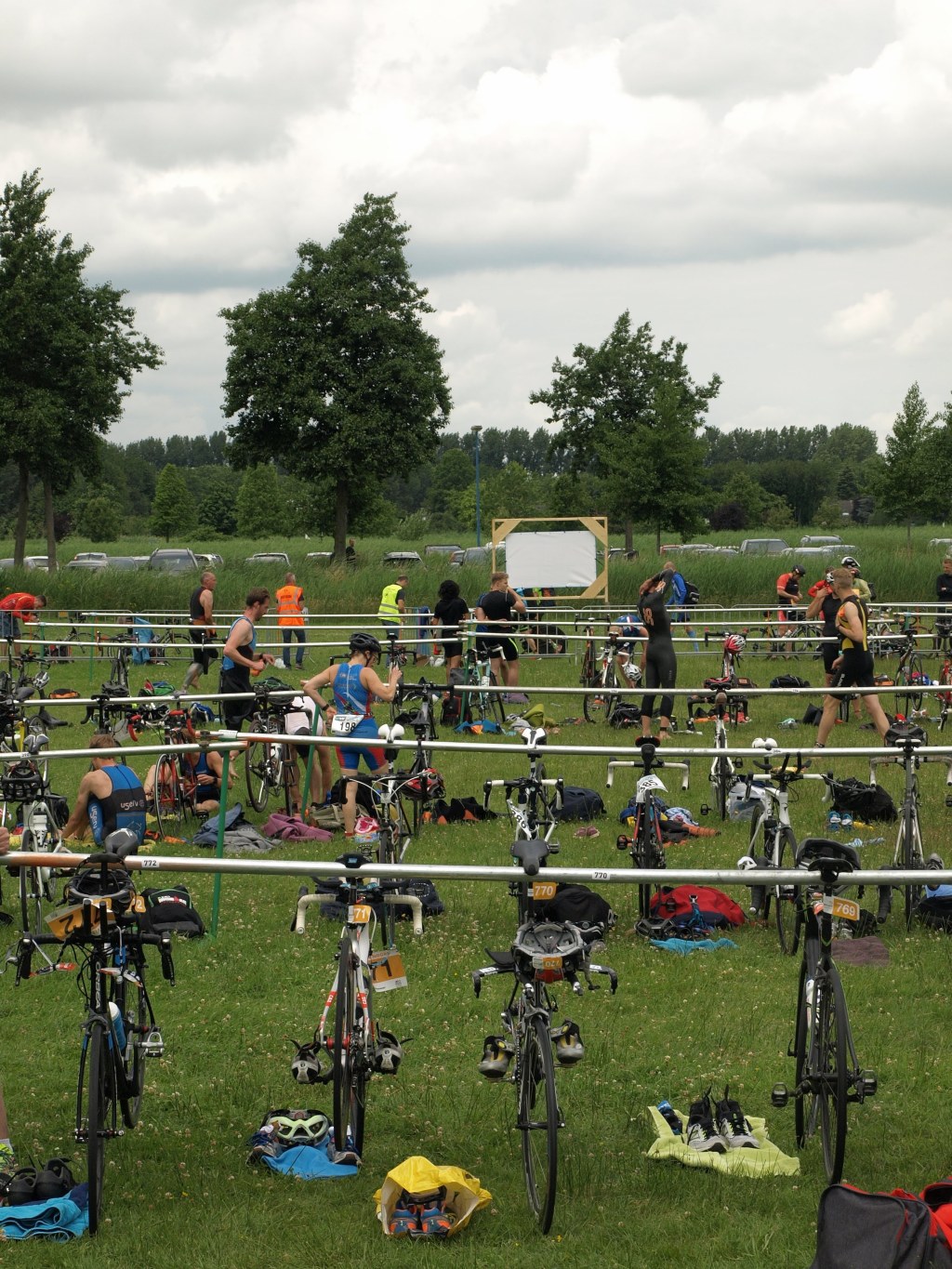
Getting ready to cycle, among other people’s properly racked bikes in the transition area - I listened to advice and read as much as I could about triathlon training and racing
- I practiced my transitions in the two weekends before the event, not caring what the neighbours would think of me planking in the front garden in my wetsuit to simulate the swim
- I figured out my nutrition and hydration as precisely as I could and didn’t try anything new on the day of the race
- When in doubt I asked for help, sometimes having to ask twice. (Thanks Henrieke Wijnsma from Spaak for taking my pedal issue seriously and fixing it– and it will be a long time before you see me again, young blond man at Erik Gorter!)
- and perhaps most importantly, my first foray into the tri world, a duathlon just over a year ago was a competition marked by a very positive, gemoedelijke sphere. Still grateful to Henk-Jan for counting my laps!
So, if I keep doing these things, and take up the dates of the next European Championship in my diary at the start of 2019, who knows… I might be slipping into something black and orange next year.
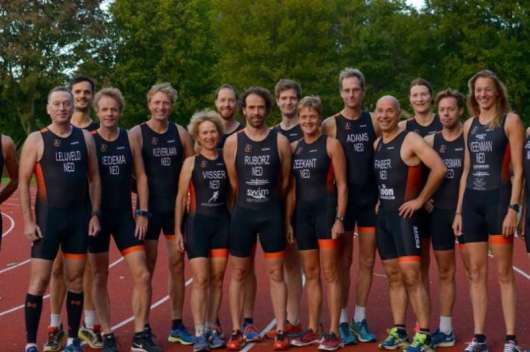
In any case, this was an unforgettable first tri.
 Anne Beaulieu